
Best Diesel Engine Oil for Semi Trucks | Class 8 Picks
Technical review updated September 9, 2026 | Reviewed by a Red Seal 310T Truck & Coach Technician
For a Class 8 engine that calls for API CK-4 15W-40, our best-overall pick is AMSOIL Signature Series Max-Duty 15W-40 (DME). It combines the strongest published wear-protection claim in AMSOIL's heavy-duty diesel lineup with a product-specific extended-service program. For commercial fleets focused on acquisition cost, Commercial-Grade 15W-40 is the value pick. Older pre-DPF/SCR engines may be candidates for Heavy-Duty Diesel & Marine 15W-40 when its application requirements match. The engine specification and viscosity always come before the brand or product tier.
Best Diesel Oil Picks | By Operating Need
Max-Duty DME
15W-40 100% synthetic. Our top pick where the engine requires a specification and viscosity listed for DME.
Max-Duty DME
Best fit for eligible line-haul operators seeking maximum protection and a documented extended-service program.
Commercial-Grade SBDF
More than 50% synthetic content, commercial positioning and OEM-style service intervals at the value end of the AMSOIL lineup.
Diesel & Marine AME
For older applications where AME's listed engine-oil categories match. Do not substitute it into modern DPF/SCR applications.
Match the Duty Cycle
Full synthetic earns its cost under heat, cold starts, high annual mileage and managed extended-drain programs. Specification comes first.
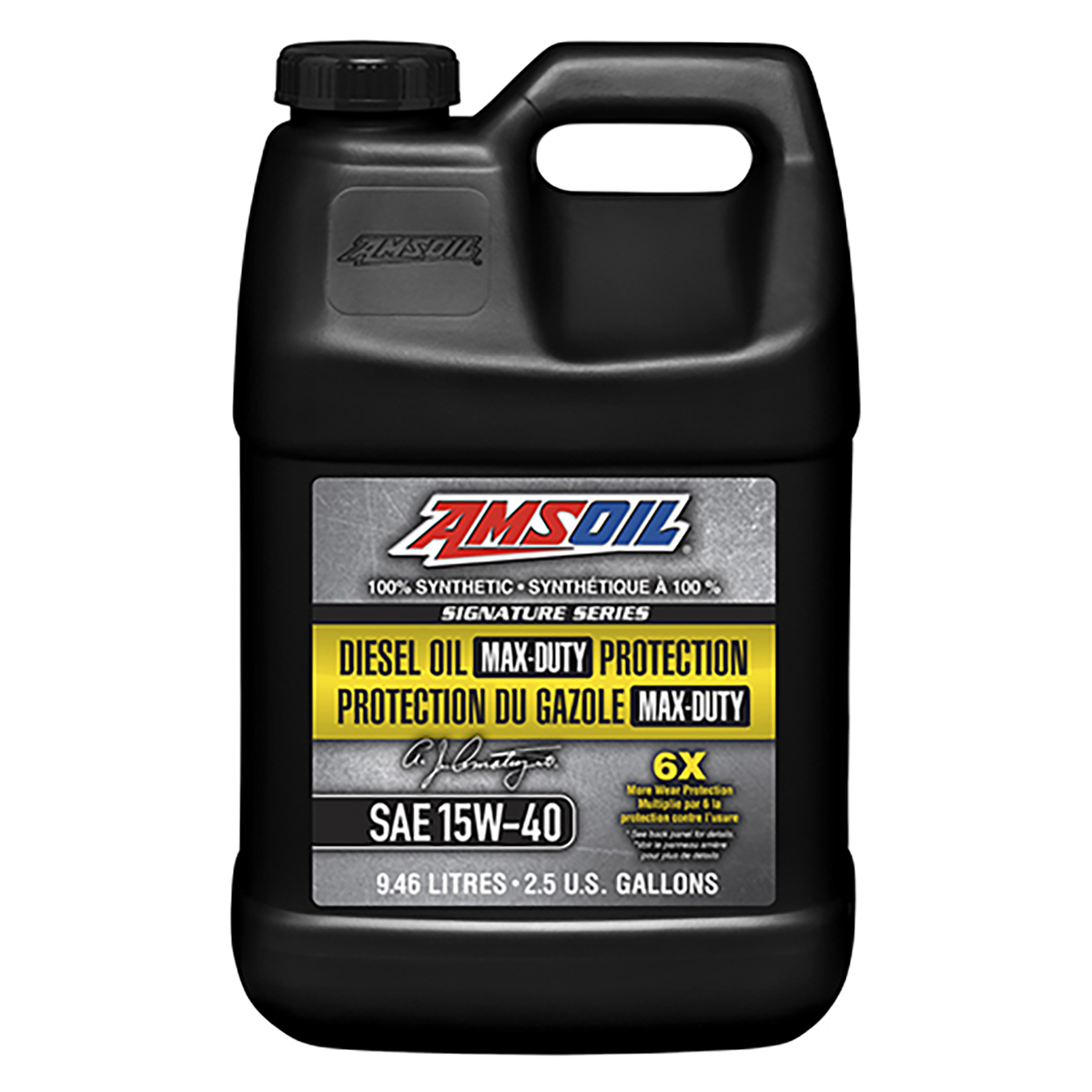
AMSOIL Signature Series Max-Duty 15W-40 | DME
100% Synthetic | API CK-4
DME is the flagship choice for operators who want the highest protection tier in the AMSOIL heavy-duty diesel lineup. The current AMSOIL INC. data sheet lists it for applications requiring API CK-4 and a broad range of heavy-duty diesel specifications.
- 6X more wear protection than required by the Detroit Diesel DD13 Scuffing Test for DFS 93K222.
- Up to 76% less oil consumption than required by the API CK-4 standard in the Caterpillar-1N Oil Consumption Test.
- Up to 60% better turbo cleanliness based on the referenced CAT C13 carbon test standard.
- Designed for viscosity control, soot handling and high-temperature service.
- Available in multiple viscosities; use 15W-40 only where the engine manufacturer calls for or permits it.
Why Max-Duty Is the Long-Haul Pick
Long-haul trucks accumulate mileage quickly, hold operating temperature for long periods and make downtime expensive. That is where a premium synthetic and a controlled drain strategy have the clearest business case.
OEM Recommendation
Published service life for eligible heavy-duty on-/off-road diesel applications is three times the OEM recommendation.
Mile Maximum
The product-specific ceiling is 60,000 miles for eligible heavy-duty service, not a generic limit for every synthetic oil.
Hour Maximum
The same service-life statement is limited to 600 hours or one year, whichever comes first.
The 60,000-mile figure is not automatic. Follow the exact Max-Duty product bulletin, the engine manufacturer's maintenance requirements and all listed exclusions. Performance-modified engines, certain high-biofuel use and specific Caterpillar applications have additional restrictions. Oil analysis is the right tool for confirming actual lubricant condition.
AMSOIL Commercial-Grade 15W-40 | SBDF
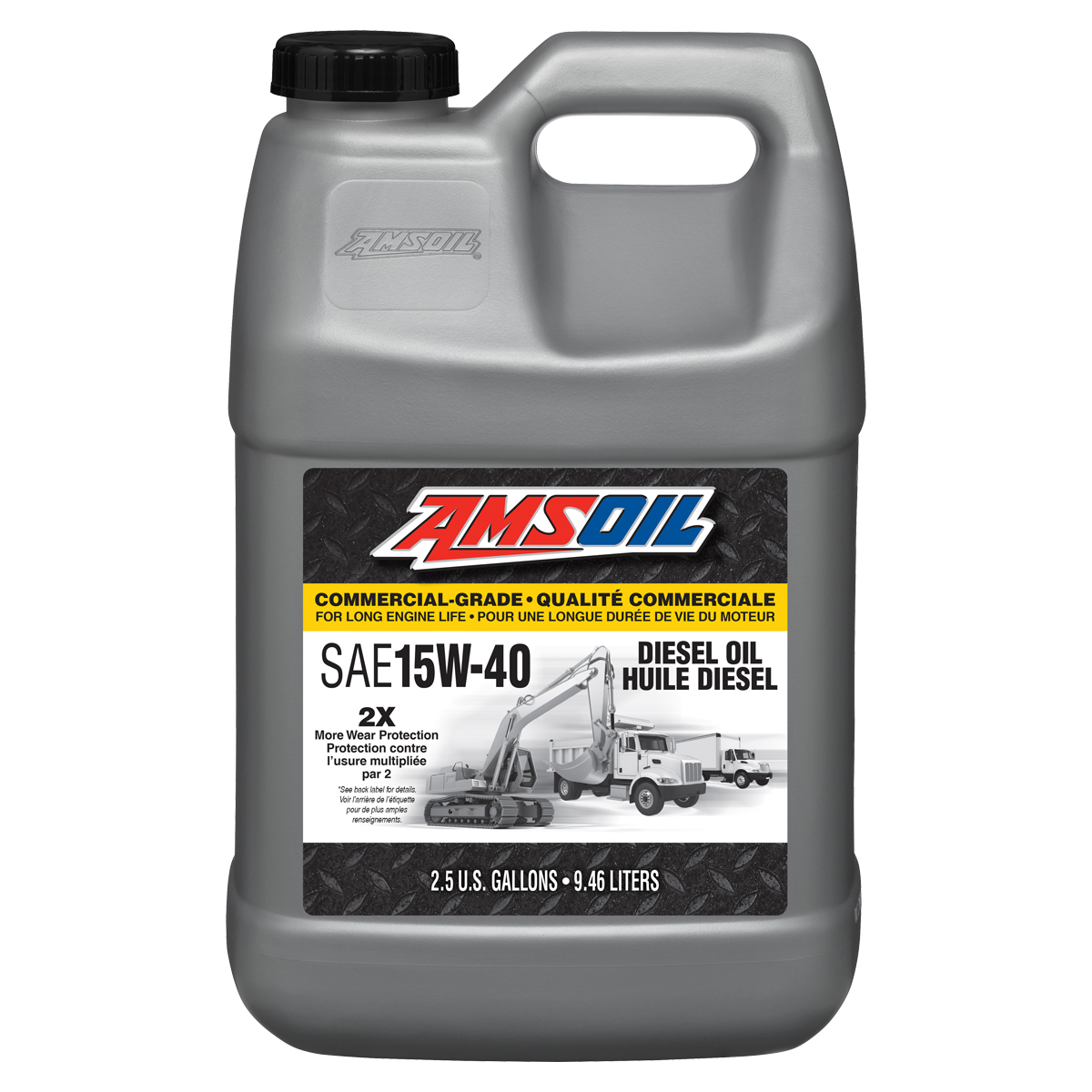
Commercial-Grade 15W-40
AMSOIL positions Commercial-Grade specifically around commercial-equipment value. It uses an advanced synthetic-blend formula with greater than 50% synthetic content and is the natural first step for fleets moving away from conventional diesel oil without jumping to the highest-cost tier.
- Greater than 50% synthetic content.
- 2X better wear protection than required by the referenced DD13 scuffing test.
- Improved heat and oxidation resistance compared with conventional diesel oil.
- OEM drain interval unless an extension is established through oil analysis.
Cost Per Mile Beats Bottle Price
The value decision for a commercial fleet is not simply which gallon costs least. Look at the complete maintenance program: lubricant cost, drain frequency, oil consumption, downtime, labour and the protection level required by the equipment.
Commercial-Grade makes the most sense when the fleet wants better-than-conventional protection while staying on familiar OEM drain intervals. Operators chasing maximum drain flexibility and reserve protection should move up to Signature Series Max-Duty.
Fleet rule: standardize only after every engine in the fleet has been checked for specification, viscosity and aftertreatment compatibility.
Heavy-Duty Diesel & Marine 15W-40 | AME
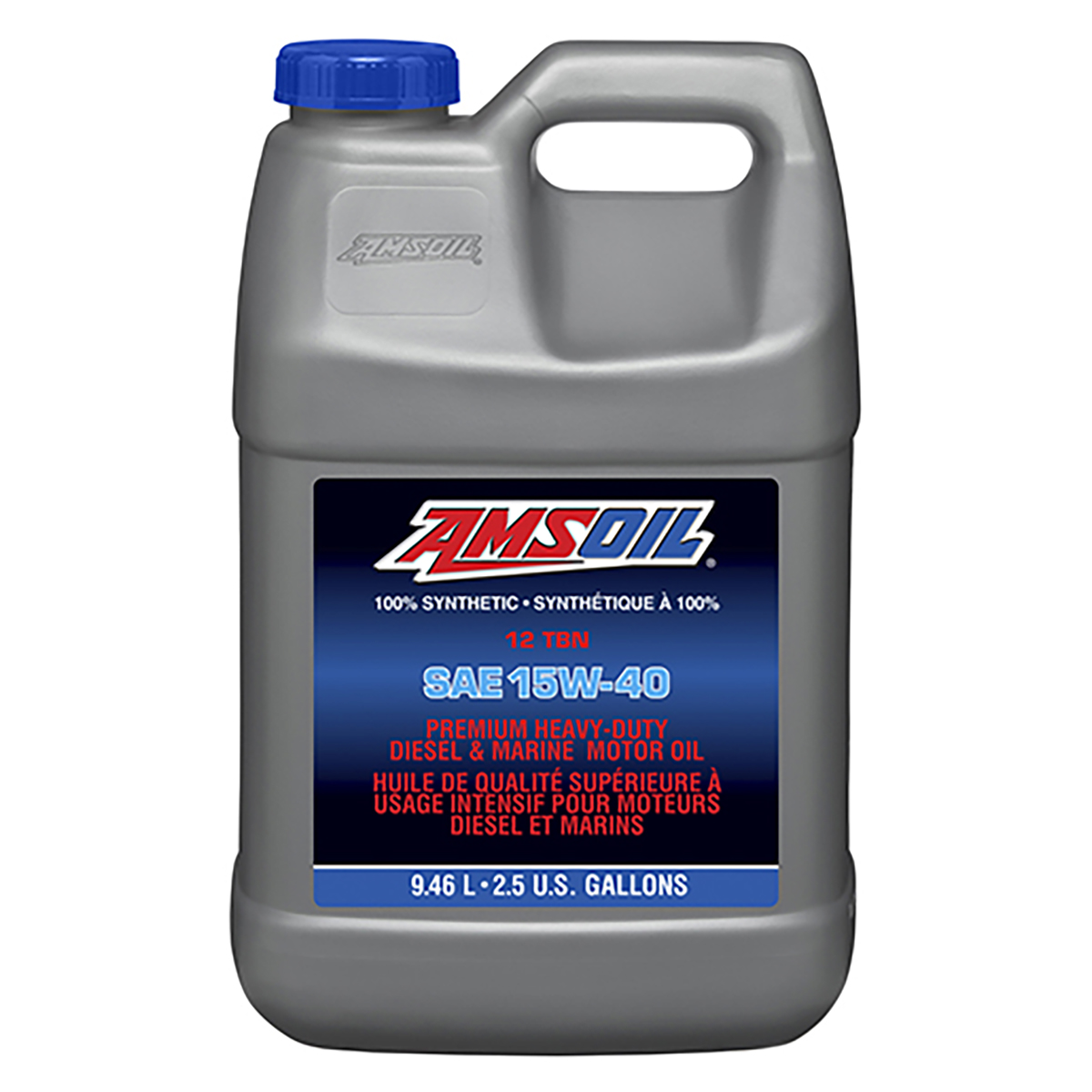
Our pre-emissions pick is AMSOIL Heavy-Duty Diesel & Marine 15W-40 for older engines where the current AME application list matches the engine's required oil category.
This is a different use case from a modern CK-4 semi truck. Older pre-DPF/SCR engines can have different lubricant requirements and do not need a modern aftertreatment-compatible oil solely because it is newer.
Do not choose AME simply because the truck is old. Confirm the engine's required API category and verify that no DPF/SCR aftertreatment requires a newer low-ash formulation. Modern aftertreatment-equipped trucks belong in the CK-4/FA-4 decision path.
Synthetic vs Conventional Diesel Oil | Which Is Better?
Full synthetic is not automatically the right answer just because it is synthetic. The correct oil must first meet the engine specification and viscosity requirement. After that, operating conditions and maintenance economics decide whether paying more for synthetic earns its keep.
| Decision | Conventional | Synthetic Blend | 100% Synthetic |
|---|---|---|---|
| Upfront Cost | Usually lowest | Middle | Usually highest |
| High-Heat / Oxidation Resistance | Standard | Improved with a strong formulation | Primary advantage of premium synthetic |
| Cold-Start Flow | Viscosity dependent | Improved potential | Strongest low-temperature potential |
| Oil Consumption / Volatility | Formulation dependent | Can improve over conventional | Premium synthetics can significantly reduce volatility |
| Drain Interval | Follow product and OEM interval | Follow product and OEM interval | Still product-specific; synthetic alone does not authorize an extension |
| Best Fit | Standard drains and lowest acquisition cost | Commercial fleet value | High mileage, temperature extremes, maximum protection and managed drain programs |
Bottom line: For a truck running high annual mileage, heavy loads or temperature extremes, a good full synthetic gives you more protection margin. If a fleet stays on OEM intervals and acquisition cost is the priority, a strong synthetic blend can make more economic sense.
Heavy-Duty 100% Synthetic | More Protection Without Max-Duty Pricing
Commercial-Grade and Signature Series are not the only choices. AMSOIL Heavy-Duty Synthetic fills the middle of the lineup for operators who want a 100% synthetic diesel oil but plan to stay on the engine manufacturer's normal drain schedule.
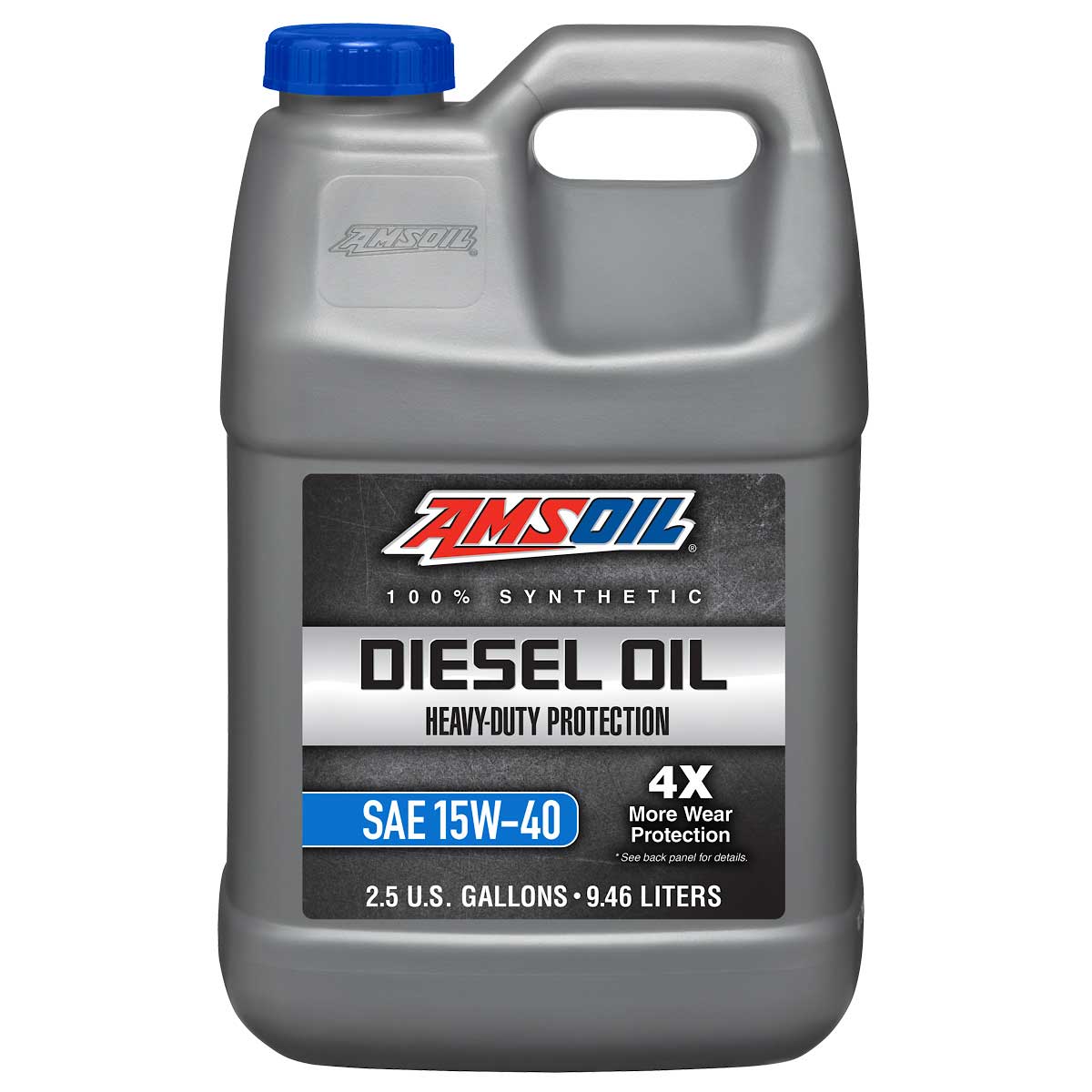
Heavy-Duty Synthetic 15W-40 | ADP
The current Heavy-Duty data sheet states 4X better wear protection than required by the referenced DD13 scuffing test. Its standard service life follows the OEM-recommended drain interval; extensions beyond the OEM interval require oil analysis.
That makes ADP the sensible middle rung for an owner-operator or fleet that wants full-synthetic protection without paying for Max-Duty's extended-service capability.
Match the Oil to the Engine | Not Just the Truck
Peterbilt, Kenworth, Freightliner, Volvo, Mack and International do not all use one universal oil. The engine and its generation determine the specification. Before choosing any of the products above, verify these four items.
OEM Specification
Confirm the exact engine-manufacturer specification required for the engine generation.
API Category
CK-4 and FA-4 are not interchangeable in every application. Use the category the engine permits.
Viscosity
15W-40 may be common, but 10W-30, 5W-40 and other grades are required or permitted in specific applications.
Aftertreatment
DPF and SCR compatibility matters. Do not move an older-engine lubricant into a modern emissions system by assumption.
15W-40, 10W-30 or 5W-40 | Use the Grade Your Engine Allows
Heavy-Duty Workhorse
Common in Class 8 service where the engine manufacturer permits the grade. Strong operating-temperature viscosity for heavy loads.
Lower Cold-Start Viscosity
Used by many modern diesel applications where specifically allowed. Never substitute solely for fuel-economy reasons.
Cold-Weather Synthetic
A common full-synthetic choice where better cold flow is needed and the engine manufacturer permits 5W-40.
Oil Change Intervals | The Product Label Beats the Word Synthetic
There is no universal synthetic-oil drain interval. Service life comes from the exact oil, engine, duty cycle and maintenance program.
| Oil Tier | Normal Direction | Extended Drain Position |
|---|---|---|
| Signature Series Max-Duty | Product-specific extended-service program | Eligible heavy-duty service | 3X OEM, maximum 60,000 miles / 600 hours / one year, restrictions apply |
| Heavy-Duty 100% Synthetic | OEM drain interval | Extension beyond OEM interval requires oil analysis |
| Commercial-Grade | OEM drain interval | Use oil analysis before establishing an extension |
| Other Conventional / Synthetic Oils | Follow the engine manufacturer and oil supplier | No generic mileage can be assigned from base-oil type alone |
Best Diesel Engine Oil for Semi Trucks | FAQ
What is the best diesel engine oil for a semi truck?
For a Class 8 engine requiring a specification and viscosity listed for it, our best-overall pick is AMSOIL Signature Series Max-Duty 15W-40 (DME). The engine manufacturer's exact specification and viscosity still take priority over the recommendation.
What is the best diesel oil for long-haul semi trucks?
Our long-haul pick is Signature Series Max-Duty because it combines the highest published wear-protection tier in the AMSOIL diesel lineup with a product-specific extended-service program. Eligible heavy-duty service is three times the OEM recommendation, not to exceed 60,000 miles, 600 hours or one year. Restrictions apply.
What is the best value diesel oil for commercial fleets?
Our value pick is AMSOIL Commercial-Grade Diesel Oil. It contains greater than 50% synthetic base oil, is specifically positioned for commercial equipment and provides 2X better wear protection than required by the referenced Detroit Diesel DD13 scuffing test.
What oil is best for an older pre-emissions semi truck?
AMSOIL Heavy-Duty Diesel & Marine 15W-40 can be a strong choice for an older pre-DPF/SCR engine when its current application list matches the engine's required oil category. Verify the exact engine requirement before use and do not substitute it into a modern aftertreatment-equipped truck.
Is synthetic diesel oil better than conventional oil for semi trucks?
Full synthetic generally offers greater protection margin under high heat, cold starts and long operating cycles, but the correct specification and viscosity come first. A conventional oil that meets the exact requirement can still be appropriate when the truck stays on standard service intervals.
Can synthetic oil extend semi-truck oil change intervals?
Only when the exact product and engine application support it. Synthetic base oil by itself does not authorize a longer drain. Signature Series Max-Duty has a published extended-service program for eligible applications; Heavy-Duty Synthetic follows OEM intervals unless an extension is supported by oil analysis.
Match the Engine First | Then Buy the Right Oil
Use the heavy-duty lookup for a specific engine or apply for an AMSOIL commercial account if you operate trucks or equipment as a business.
Continue the Oil Selection
Technical basis reviewed September 9, 2026: AMSOIL INC. G3467 Signature Series Max-Duty Synthetic Diesel Oil (6/25), G3468 Heavy-Duty Synthetic Diesel Oil (6/25), G3793 Commercial-Grade Diesel Oil (11/24) and Diesel Oils Dealer Sales Brief (8/23). Product specifications and application listings can change. Match the current lubricant bulletin to the engine manufacturer's current service information before use.